Monday, April 7, 2014

April 7th, 2014 The Georgia belle bees are here, and what a fast learning curve!

April 5th and 6th, 2014
My Georgia belles have arrived, all 6,012-6,014 of them!  (Recall each bee package has 3 lbs of bees which is about 3000 bees, plus a Queen and her 5-7 attendants.) Walt and I picked them up Friday night and kept them fed through the package screening by squirting thick sugar syrup with a small dose of antibiotic into and on the screen of the cages. That initiated some activity!  They were VERY thirsty. They had been shaken together last Tuesday and not everyone could maneuver to the enclosed can of sugar syrup with three small punctured holes in it to get a drink on their drive to MD. Satisfied that they had at least enough syrup to eat and hold them over, I covered them with newspaper to keep the packages dark, and stored them away for the night. They settled down to a nice harmonic buzz.

Saturday morning it was sunny, but a cold North wind was blowing and it was in the mid 50sF.  I decided to wait until the sun was high in the sky to hive (install) them.  Around 3pm it seemed right, even though the wind just wouldn't quit.  I've never installed bees in such wind.  But, it was sunny and warmer (now 60sF), so I decided to go for it.  My neighbor noticed me heading out and said oh your bees are in!  Yep, I'm going to hive them now.  He said, oh, you might want to wait.  I just heard it will be 31F tonight.  Tomorrow might be better.  Hmmmm.  Dropping below freezing?  That's not good for young new bees and queens from Georgia where it is warmer.  I decided to go ahead and hive the bees, but to do it differently from in past years.  (See very first post from last year).  We will soon see if it worked or not!

Instead of using two supers on each hive, one to hold frames, queen cage, bees,and syrup can from their travel package, and the other to accommodate a gallon bag of sugar syrup laid over the top of the frames with a small slit to allow a drinking trough as in the past, I decided with dropping freezing temps coming tonight, we could not have a frozen bag of syrup, essentially an ice pack, lying on top of her majestys! And, with two supers, one of them empty to accomodate the bag of syrup, that would be a lot of volume to heat for a small cluster of bees. It would get too cold and kill the queen and many of them. So, one super would warm nicely.  Being a veteran beekeeper, I keep some previous year's frames of capped honey stored and I pulled these out for the girls to eat on.  As they eat the honey, they will make cells for the queen when she walks out of the cage to start laying eggs.  (A brand new beekeeper would not have had this advantage,) I also slipped the ipm bottom boards into the bottom board slit area to provide extra insulation for the night.  I hope these modifications worked ok.

I also decided to not pierce the candy plug in the queen cages.  The queens are young already mated but small and look healthy.  I decided with cold weather, I didn't want them coming out too soon.  Any disturbance could cause the bees to sting her to death.  Extreme cold from their Georgia perspective might do this.  So, I'll let her attendants take a bit more time to eat through the candy plug and release her.  As I've mentioned before, sadly they-the attendants-will be stung to death when they walk out of the cage.

As you can see, a beekeeper has lots of options.  There are standard ways you are taught to do things by master beekeepers and special classes, but common sense and experimentation and experience teach us as well.  There is no one way to do something in beekeeping I find.

So, other than these modifications, due to impending cold, I installed my girls exactly as I had last year.  (See much earlier post and photos.)  The trick is to see that at the entryway you have several girls "fanning" after a successful installation.  It was windy, but they were fanning.  (Workers stand on their tippy tarsi and do a sort of headstand.  They beat their wings feverishly to release a pheromone scent on the back of their abdomen.  It flows out in a plume from the bees doing this fanning and signals to others; here we are! Come over here.  We've found a new home.  You'll be safe inside.)  Ok,...so I anthropomorphize a bit!
Baby bees (that's what I affectionately call these really young bees that have never flown), that had fallen from the hive during installation were crawling toward where the fanning was coming from and toward each hive entry almost immediately after install.  A good sign. The wind was not adversely impacting the fanned plume of pheromone scent.

Within an hour of install, I watched the older workers that do fly taking their first training flights from each hive.  First they would travel maybe 3 feet out and then circle back, taking in the sun's position and landmarks around their new hives.  A bit later, they were going 6 to 8 feet from the hive and circling back.
By evening, some were actually finding the blooming maples in the backyard some 20 feet away.  Amazing. They are fast learners!  I'm proud of my child prodigies! Now, if they can just survive these temps!

April 7th, 2014
After church was over. I drove to the backyard to see my bees.  (I actually drove by the hives before church, but it was still too cold and there was no activity yet.)  After church, about noon, it was sunny and warm, a pretty day.  They were coming in and out of the entryway.  I got out of the car and went and sat on the bench to watch them for 30 minutes.  Several girls were bringing in a pretty red pollen.  Maple, no doubt. They found it.  In less than 24 hours, really in less than 20 hours, these foreign girls had figured out their new homes and had found food 20 feet away and were making a beeline back and forth as they started their new colonies up and running. Walt came by later to watch as well and explained, now that's a fast learning curve!


Thursday, April 3, 2014

The bees are coming; the bees are coming!

April brings such joy to the heart of a beekeeper!  My new bees (to replace my old ones that sadly died from the harsh winter) are coming.  They will arrive Friday night.  I've ordered two 3 lb packages each with a queen cage in them; they come from a bee warehouse in Georgia; each package cost me about $82. The 3 lb packages have about 3,000 bees (all female workers for the most part) recently shaken into them from differing hives.  They have never met each other prior to being shaken into this wooden box with screening on it; the packages are carefully weighed to make sure the box is exactly 3 lbs.
Being from different hives, they are upset and disoriented.  Then there's the matter of being separated from their moms (original queens in their own separate hives).  Some imposter queen is now in the 3 lb package in small separate cage with them, but she doesn't smell right; not like mom did.  They are so upset they would sting her if they could get at her.  (Thus her separate protective cage!) Then there's the matter of driving over 800 miles to a new destination. Driving on the back of a truck bed means road potholes, gas fumes, temperature differences, and vibrations; by the time the packages arrive, there will be several dead sisters on the edge of the cluster and the floor of the package.  It's just too much for them to take it all.  And, on top of that, in Georgia, it is already spring.  But, in Virginia and Maryland, the maples are just blooming. The crocuses and dandelions are finally coming out, but there is definitely a lag in available flowers for pollen and nectar (and warmth of temperature to which they are used to having)!  It's a wonder, any of them will survive at all. When they arrive safely, I will let my readership know.

Rather than having them sent through the US mail or UPS or Fed Ex, which would be an additional shock to their systems and engender curiosity from postmasters and deliverymen with possible negative consequences, my local bee club sends a representative to go down to Georgia and pick all of the ordered bees from the club up at one time and bring them back in a trailer together.  Once they have arrived, we get a call, we go and pick them up, and bring them home.  I check them to be sure all looks in order; then I place mine in a cool, dark, dry place - my basement.  They need to settle down and get used to their new queen.  Darkness helps.  That's what a hive is inside-dark and quiet except for buzzing.

They are also very thirsty, so I mix up my sugar water spray bottle with a bit of Fumigilin B antibiotic in it to help feed them and calm them down as well; they often will have dysentery or diarrhea from their long trip; this helps tremendously.  I spray little droplets on the screening of the box's sides for them to lap up like kittens lapping milk. You don't want to douse them and get them chilled, wet, or cold, and especially not the queen; that's one reason the cage is at the top and off the bottom of the package.  She gets better ventilation this way; also the cluster will begin to form around her as they recognize her as their new monarch.

The queen cage is provided with 5-7 of the queen's personal attendants who feed her as she cannot feed herself.  They eat a sugar candy plug in a small opening at the end of the queen cage.  It should take 4-7 days for them to eat through this plug.  By the time they do, her majesty can walk out and be greeted royally and not stung to death by her new subjects.  It takes those 4-7 days for her pheromone (perfume smell) to be accepted by her new subjects.  Unfortunately, the 5-7 attendants in the cage with her will be stung to death as they exit the cage, as they are not recognized as like members.  That's rather sad and a huge sacrifice on their part. But, I'm getting ahead of myself.

The bee packages will sit in the basement with me feeding them spray drops of sugar water for about 2-3 days; then I will hive them in their new hives.  The queen with attendants will still be in their separate cage, but now in the hive, too-the cage hangs from the top of one of the frames with the plug side down; some beekeepers prefer up; I like down to have gravity assist in drawing the queen out; I will check the candy plug and even add a mini marshmallow to prolong the process to make sure that when the queen comes out she is accepted and not stung to death! Queens are expensive and a hive cannot make it without one!  If the process seems slower for the attendants eating the candy plug opening, I'll pierce it with a small nail hole and not add a mini marshmallow. If I pierce it, I must be careful not to pierce the queen or her wings, legs, etc.

So, after bee pick up tomorrow, this next week will be consumed with the above processes and getting hives ready and watching the girls and the queen to see that all is well within the two new kingdoms (queendoms). Spring has sprung.  The bees are coming the bees are coming! I'm psyched.

Thursday, March 20, 2014

Recent diary of events...dead bees and oh spring, where art thou?

March 7, 2014 observation from car-
Believe it or not, it hit 40F today, and it feels warm and sunny.  I'm in a big boot to protect my ankle from my recent surgery, and I decided I could stand to wait no longer to know if my bees had survived the winter.  I hobbled to my car and did my best to drive it out to the bees in my backyard and looked from the car window longingly at them.  Well, no one was flying of course, because it was 40F.  I looked closely at the two hives.  I saw three dead bees on hive #2's front landing board entryway "porch."  But, no way to know if the hive was alive, because I didn't know when these girls had been kicked out. It was since Ashley had visited at the end of February, and she had cleaned the front porch of the hive off.  I saw no dead ones on hive #1's front porch. Bad news for that hive.  They are definitely no more.

March 15, 2014
I drove my car to behind the house to look at the beehives again.  Today is up to 65F; the first real warm temperatures we have had.  Some flowers are starting to bloom, and all kinds of bees are on my neighbor's purple crocuses that have opened in between snow storms.  The boot on my bad foot is awkward, and the ground is a bit uneven, but I have to know.  I could not see if anyone was flying from the hives and they should have been on this warmer sunnier day. So, I hobbled over to hive #2.  No new dead bees had been kicked out.  Oh sigh and sadness!  I stuck a stick in the entry hole and pulled it out, hoping someone (a little guard bee) would be roused and come out to check on me.  Nothing.  Oh man!  I watched a few more minutes.  My heart sank.  A housefly and two blowflies landed at the same time on the side of hive #2. Damn! Not a good sign at all.  These creatures, especially the blowflies, are attracted to death and destruction.  So, there must be bee corpses inside.  Time to go in and see.

I opened up the top cover to inspect,... no activity, no warmth, a few dead corpses between frames.  The top super was still full of frames of honey.  I cracked the propolis sealing this super to the one below it with my hive tool, and lifted the super over to a bench I use to hold the supers while I check through the hive as a whole.  It was hard to lift it due to the weight of the remaining honey, and the ground was hard to negotiate with my humongous protective foot boot; hope I'm not overdoing it, I thought. My ankle may pay for this, but I need to know.  I looked in the next super.  Less honey, and there they were, all in a small cluster on the second and third frames in from the outside.  They were all dead.  Loyal servants to their queen to the end.  Surrounding her and trying to keep her warm, but the cluster just got too small to heat the hive up to its necessary 92F temperature.  I stood and admired them in respect and in honor of their valiant service.  Such commitment and loyalty to their monarch to the bitter (and I mean bitter cold!) end.

I know when they died.  That night it got down to -1F on March 3rd, 2014.  Going into the winter the hive was not huge, and if it had been a normal winter, well, that smallish cluster of individuals could have made it.  There was enough honey.  But, we've had four bouts now of sub zero temperatures!  Such winters are just unheard of in this area of the mid-Atlantic.  And, of course, I could do nothing to help them along with my ankle surgery and recovery.  They were on their own. They almost made it!  I do admire them.

Well, I set about the task of removing the supers and pulling out the screened bottom board with all the little bee corpses.  Because of bacteria and disease, you do not want these to sit here too long. They've been refrigerated since they died, but with warmer temperatures, decomposition is not something you want inside the hive (which is normally pretty sterile).  You also do not want to dump the corpses near the hive and attract hive beetles and other pests.  So, I remove the corpses and throw them away far from the hive.  Then, because it is a sunny day, and sun is the best uv light sterilizer there is, I place the bottom board in full sunlight to sterilize them. A little honeybee from a neighboring beeyard shows up and buzzes me.  Kind of a flyover salute to my hives, I think.  I leave the supers stacked-up.  They do have honey in them, and that could be an issue if found by some of this bee's hungry sisters.  But, it's just barely warm enough for bees to fly, anyway. So, I won't worry about it until the bottom boards get some good sunlight on them; (I also cleaned out hive #1).  I've already ordered two new packages of bees and they are due to arrive on April 3rd, 2014.  This same equipment needs to be ready to greet them.

March 16, 2014 4pm
The bottom boards have sat out in the sun, but today is more overcast and a snow storm (yes, another one!) is headed our way.  I cannot let these pine wooden pieces of equipment lie out open in the weather.  They will get moist, warp, and be areas for fungal growth.  Not good for a hive's insides! So, I drive back out to the backyard and hobble over in my boot and close all parts of the two hives back up again.  Just as I finish, it starts to snow.  We get 6 inches.  Spring is supposedly next week!

Wednesday, March 19, 2014

NPMA's Position Paper on Bee Health (Feb 17, 2014)

NPMA's (National Pest Management Association's) Position Paper on Bee Health (Feb 17, 2014)

Issue: Bee Health

Background: We are taught early on that bees are beneficial insects.The value of insect pollination to U.S.agricultural production is estimated at $16 billion annually; about three-­‐fourths of the value is attributable to honey bees. U.S.Department of Agriculture (USDA) estimates of overwinter bee colony losses have averaged more than 30 percent annually in recent years.(Since many beekeepers have been able to replace lost hives, overall honey bee colony numbers are stable.)
Science suggests multiple factors for the decline in bee health, including: parasites, diet and nutrition, lack of genetic diversity, habitat loss, beekeeping management practices,weather,and viruses. A 2013 joint USDA and U.S.Environmental Protection Agency (EPA) report found the varroa mite as the “most detrimental pest of honey bees.”  Some have unjustifiably singled out pesticides as the primary cause for the decline in bee health, focusing specifically on a class of pesticides known as neonicotinoids. As part of its periodic review of every pesticide, EPA is presently reevaluating neonicotinoids to ensure they meet contemporary health and environmental standards. While the process is expected to last until 2018, EPA can impose use restrictions sooner, if the data warrants such action. In fact, last August, EPA amended language on neonicotinoid product labels to better safeguard bees from unintended exposure.

When used improperly, pesticides can indeed be harmful to bees. Pest management professionals (PMPs), however, have met their states’ pesticide applicator licensing and certification requirements and are trained to apply pesticides according to label directions. The by product of EPA’s evaluation of a pesticide’s potential environmental and health hazards, labels are an extension of federal and state pesticide law. Of course, bees can also be pests, infesting homes, and threatening human health in certain situations. Consequently, PMPs are frequently contacted to manage such problems. While many PMPs do try to preserve honey bee colonies for beekeepers to take, sometimes treating bees with a pesticide is unavoidable.

When used according to the label, there has been no demonstrated negative effect on bee health associated with use of neonicotinoid insecticides. Moreover, the chair woman of a major National Academy of Sciences study on the loss of pollinators recently said she was “extremely dubious” that banning neonicotinoids would have any positive effect. Nevertheless, in December, the European Union, using worst-­‐case exposure assumptions and an overly conservative interpretation of the precautionary principle, imposed a two-­‐year moratorium on certain uses of three neonicotinoid pesticides. Similar legislation is pending in Congress.

Action: The National Pest Management Association urges Members of Congress to withhold support from measures that unfairly blame pesticides for the decline in bee health, overlooking the widespread science that shows this is an extremely complex issue with multiple factors involved. NPMA also urges Members to join the Congressional Pollinator Protection Caucus (CP2C), a bipartisan group dedicated to protecting pollinators and their habitat.

February 17, 2014

Legislative Day Attendees Raise Awareness About Bee Health and the Pest Control Industry (March 12, 2014)

From: http://www.pctonline.com/Legislative-Day-2014-recap.aspx

Legislative Day Attendees Raise Awareness About Bee Health and the Pest Control Industry 

News Coverage
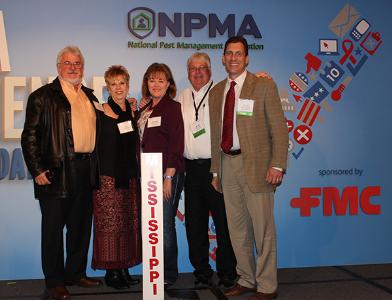
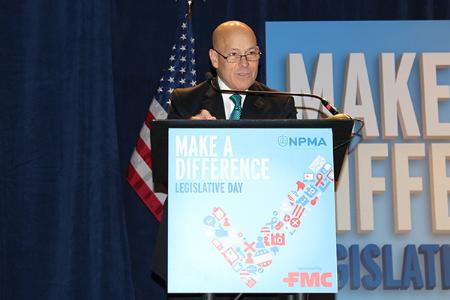
More than 300 industry professionals traveled to Washington, D.C., for NPMA Legislative Day, where this year’s lobbying efforts were two-fold: Attendees thanked their congressional reps for a pair of important legislative wins in 2013; and educate their reps about bee health and the structural pest control industry.
Brad Harbison | March 12, 2014


WASHINGTON, D.C. — More than 300 industry professionals traveled to Washington, D.C., March 9-11, for NPMA Legislative Day, where this year’s lobbying efforts were two-fold: Attendees thanked their congressional representatives for a pair of important legislative wins in 2013; and educated their reps about bee health and the structural pest control industry.
In 2013, NPMA secured a couple of big wins on issues that directly impact pest management professionals – and these outcomes were undoubtedly impacted by Legislative Day visits. At last year’s Legislative Day, attendees asked their House Representatives and Senators to support legislation retaining food uses for the fumigant sulfuryl fluoride (SF) and limiting U.S. Department of Agriculture’s Wildlife Services (USDA/WS) competition with the private sector for urban rodent control work. Both issues were successfully addressed. (Click here to read NPMA's position paper.)
“I hope that last year’s wins were proof positive to you that when you take time to travel to Capitol Hill — and when you take time to contact your legislators — you are heard,” said NPMA Director of Government Affairs Gene Harrington. “When you take time to write to your lawmakers you do make a difference.”
Attendees of this year’s Legislative Day used their visits as an opportunity to thank the many members of Congress that spearheaded the passage of legislation retaining SF’s food uses and helped NPMA satisfactorily address the USDA/WS competition issue. These efforts help strengthen those relationships.
The primary goal of this year’s visits was for attendees to educate their reps about bee health and the structural pest control industry. Specifically, to make them aware that reasons for the declining bee population are complex and involve a whole host of issues including: parasites; diet and nutrition; lack of genetic diversity; habitat loss; beekeeping management practices; weather; and viruses. Attendees also urged their House reps to join the Congressional Pollinator Protection Caucus (CP2C), a bipartisan group dedicated to protecting pollinators and their habitat. (Click here to read NPMA's position paper).
In addition to Capital Hill visits, other highlights from Legislative Day included:
  • A debate between political pundits Pat Buchanan (R) and Donna Brazile (D), sponsored by FMC Professional Solutions. Buchanan and Brazile gave their takes on the state of country. While they differed on policies both agreed that Obama faces a challenging 2014, partly because historically presidents struggle in their second-terms.
  • John Heilemann, author and MSNBC political analyst, gave a presentation sponsored by Dow AgroSciences. Heileman handicapped the 2016 presidential race. Unlike many pundits who have predicted that Hillary Clinton is all-but assured of being the Democatic choice, Heilemann said Clinton’s age (66) might give her reason to reconsider running. On the Republican side, Heilemann said the four candidates he thinks can be energize Republican party's base and also appeal to a broader part of electorate are New Jersey Gov. Chris Christie; former Florida Gov. Jed Bush; Sen. Paul Ryan; and former Arkansas Gov. Mike Huckabee.
  • Mike Allen, Chief White House Correspondent for Politico gave a presentation sponsored by Control Solutions Inc. Allen provided insights into the Obama presidency. Allen said that, thus far, the president’s second-term has been characterized by a “lack of urgency” and that Obama “is convinced his place in history is secure.”
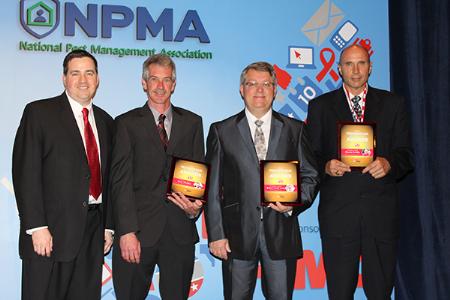
  • PCT presented its 17th annual Technician of the Year Awards, sponsored by BASF, to our winners: Tony Decker, Scherzinger Pest Control, Cincinnati, Ohio – residential category; Corky Long, Presto-X, Springfield, Mo. – commercial category; and Shawn Svehla, Turner Pest Control, Jacksonville, Fla. – termite category.
FMC was the primary sponsor of NPMA Legislative Day. Other sponsors include: Bayer, Control Solutions, Cook’s Pest Control and Dow AgroSciences.

USDA (United States Department of Agriculture) Commits to Investment in Pollinator Health Improvement

From ESA Science Policy News March 6, 2014  (Entomological Society of America <esa@entsoc.org)...

USDA Commits to Investment in Pollinator Health Improvement
USDA announced on February 25 that its Natural Resources Conservation Service (NRCS) will provide $3 million in funding for the improvement of pollinator health.  Funding will come from the Environmental Quality Incentives Program (EQIP) and will be used “to promote conservation practices that will provide honey bees with nutritious pollen and nectar while providing benefits to the environment.”  The funding will be targeted at five Midwestern states: Michigan, Minnesota, North Dakota, South Dakota, and Wisconsin.  Funding will be used to “provide guidance and support to farmers and ranchers to implement conservation practices that will provide safe and diverse food sources for honey bees.”  Applications are due on March 21, 2014.
Sources and Additional Information:
Additional information can be found in a USDA press release at http://www.usda.gov/wps/portal/usda/usdahome?contentid=2014/02/0028.xml&contentidonly=true

So That's Where Honey Comes From, by Kim Flottum in "Catch the Buzz"

Subject: CATCH THE BUZZ - So That's Where Honey Comes From
by Kim Flottum
CATCH THE BUZZ
Nectar: A sweet reward from plants to attract pollinators
Flowering plants need sugar transporter SWEET9 for nectar production
Evolution is based on diversity, and sexual reproduction is key to creating a diverse population that secures competitiveness in nature. Plants as largely immobile organisms had to solve a problem: they needed to find ways to spread their genetic material beyond individual flowers. To make sure that flying pollinators such as insects, birds and bats come to the flowers to pick up pollen, plants evolved special organs, the nectaries, to attract and reward the animals. Scientists from the Max Planck Institute for Chemical Ecology in Jena (Germany) and their colleagues from Stanford and Duluth (USA) have identified the sugar transporter that plays a key role in plants' nectar production. SWEET9 transports sugar into extracellular areas of the nectaries where nectar is secreted. Thus, SWEET9 may have been crucial for the evolution of flowering plants that attract and reward pollinators with sweet nectar. (Nature, March 16, 2014, doi: 10.1038/nature13082)
Despite the obvious importance of nectar, the process by which plants manufacture and secrete it has remained a mystery. New research from a team led by Wolf Frommer, director of the Plant Biology Department, Carnegie Institution for Science in Stanford, in collaboration with the Carter lab in Minnesota and the Baldwin lab at the Max Planck Institute for Chemical Ecology in Jena, Germany, now identified key components of the sugar synthesis and secretion mechanisms. Their work also suggests that the components were recruited for this purpose early during the evolution of flowering plants. Their work is published by Nature.
The team used advanced techniques to search for transporters that could be involved in sugar transport and were present in nectaries. They identified SWEET9 as a key player in three diverse flowering plant species, thale cress Arabidopsis thaliana, turnip Brassica rapa and coyote tobacca Nicotiana attenuata, and demonstrated that it is essential for nectar production.
In specially engineered plants lacking SWEET9, the team found that nectar secretion did not occur but sugars rather accumulated in the stems. They also identified genes necessary for the production of sucrose, which turn out to be also essential for nectar secretion. Taken together, their work shows that sucrose is manufactured in the nectary and then transported into the extracellular space of nectaries by SWEET9. In this interstitial area the sugar is converted into a mixture of sucrose and other sugars, namely glucose and fructose. In the plants tested these three sugars comprise the majority of solutes in the nectar, a prerequisite for collection by bees for honey production.
"SWEETs are key transporters for transporting photosynthates from leaves to seeds and we believe that the nectarial SWEET9 sugar transporter evolved around the time of the formation of the first floral nectaries, and that this process may have been a major step in attracting and rewarding pollinators and thus increasing the genetic diversity of plants," Frommer said.


This message brought to you by Bee Culture, The Magazine Of American Beekeeping, published by the A.I. Root Company. Find us at -Twitter. Facebook. Bee Culture’s Blog.

I'm not dead yet! ( from Jan. 25, 2014)

This was written on January 25th, 2014, but posted 3-19-14.  (Editors note: I had ankle surgery in December,


and have been slow to keep up with beeblog postings as I should have. I will try to do better.)

My goddaughter Ashley and her mom came to visit me this past Saturday.  She's 16 and able bodied.  I'm 52 and still hopping around on one leg with a walker after my ankle surgery of  Dec. 16th, 2013.  We've had tons of snow, so I've neither been out of the house in 6 weeks, nor checked on my poor little bee hives in the backyard.
Ashley likes bees.  She also likes being helpful.  (Such a wonderfully rare teenager!)  I saw she had good winter boots with nice traction on the soles.  I seized the moment!  "Ashley, would you go check my hives and see if any bees are being kicked out of the hive onto the front landing board or in front of the hive on the ground?"  An enthusiastic "SURE!" was her reply.
If you see dead bees recently kicked out in front of the hive, the colony is still alive.  I have my doubts after those severely cold temperatures of last week down below 0*F.  But, I'd sure love to know what's going on out there, and last week we had two upper 50*F days.  If anybody is alive, they would have taken cleansing flights and the mortuary bees would have cleaned out any dead or decaying bees.  So, I asked her to also look for little flecks or specks on the front of the hive.  These specks would indicate their fecal material while cleansing.  They don't go far. It's still too cold.
Liza, her mom looked at me and said, "will she get stung?".  "Oh no!  It's much too cold for them to fly today. She's fine," I replied.  Ashley bounded down the backyard terraced stairs to go to the hives.  Her mom and I sat on the couch in front of the fireplace with my injured foot propped up and drank coffee while chatting. Ashley was gone a long time, and we kind of forgot about her.
I suddenly heard, "Kathy, look!"  Here was Ashley returning with a worker bee in the palm of her hand. "Where did you get her, Ashley?"  "She was on the front porch (landing board) of hive 2."  "No kidding?! That means someone is inside surviving and getting enough honey to stay warm and function enough to kick her dead sisters out! That's good news! I didn't think they would survive those temperatures last week!" Liza and I resumed our conversation and Ashley sat in the rocking chair with the bee in her palm and rocked and watched it.
"KATHY! She's moving!"  "What?"  "She's not dead, she's moving!"  "Really?" "Yes, look!"  And, sure enough, the bee had sat in Ashley's warm palm and in front of the fireplace long enough that she was starting to move her legs.  (The room temperature was about 70*F.) She was not moving fast, by any means, but just as if she were in the last throes of death and grasping at the warmth the new environment provided. "Now, can she sting her?," asked Liza.  "hmmm,...she's not moving too fast!", I said; "well, I think she must have been one of the bees on the outer edge of the overwintering cluster surrounding the queen in the hive, and she took the brunt of these recent cold temperatures trying to keep her queen and other sisters warm; and then, she must have fallen from the cluster to the bottom board where it was colder; her sisters thought she was dead and kicked her out."  "Can I keep her?," asked Ashley. "No!," said Liza! "She really won't survive away from her hive," said I, "but if you get her warm enough to walk, you might try placing her back in the hive, and perhaps she will rejoin the cluster." So Ashley blew warm air on her and ran back down to the hive and held her a bit longer and then gently placed the little honey bee back in the entryway and tried to encourage her to walk inside and rejoin her family.  But, we took some photos first.


This is from Minnesota public radio news (from early March, 2014):

Beekeepers seek halt to corn pesticides said to kill bees


Posted
A group of Minnesota beekeepers on Wednesday asked state agriculture officials to suspend the use of corn seeds treated with certain pesticides.
The petition signed by 40 beekeepers blames neonicotinoid pesticides for killing honeybees.
Currently, Minnesota farmers only have access to seeds treated with neonicotinoid pesticides, but central Minnesota beekeeper Steve Ellis said that needs to change.
"Beekeepers in Minnesota last year and in years previous have been reporting mortality events at corn seeding time," said Ellis, who has about 2,500 hives in Barrett, Minn. "Apparently the dust is getting off of the corn seeding and going off-site and causing poisoning of honeybees on flowers and around their hives."
Ellis said the petition's signers represent just more than10 percent of the managed bees in the state.
In the last several years, more than a third of the nation's honeybee population has died each year, according to estimates from the U.S. Department of Agriculture. Studies have shown the pesticides weaken bees' immune systems.
But the companies that manufacture the pesticides have disputed those findings and are challenging Europe's moratorium on neonicotinoids in court.
Meanwhile, Ellis and other U.S. beekeepers have sued the Environmental Protection Agency for not acting on neonicotinoids.
Ellis said Canada has started a program that makes corn seeds not treated with neonicotinoid pesticides commercially available, and he said he'd like to see something similar in the United States.
"I realize that logistically it's going to be difficult at this time to make that happen for this year," he said. "We need a leader on this."
Ellis said he hopes Minnesota will take on that role, noting that states can have more stringent rules than the EPA.
The Minnesota Department of Agriculture is in the midst of a yearlong review of neonicotinoids. A House environment committee will get an update from the agency on Thursday and take public testimony on threats to pollinators.