Thursday, March 20, 2014

Recent diary of events...dead bees and oh spring, where art thou?

March 7, 2014 observation from car-
Believe it or not, it hit 40F today, and it feels warm and sunny.  I'm in a big boot to protect my ankle from my recent surgery, and I decided I could stand to wait no longer to know if my bees had survived the winter.  I hobbled to my car and did my best to drive it out to the bees in my backyard and looked from the car window longingly at them.  Well, no one was flying of course, because it was 40F.  I looked closely at the two hives.  I saw three dead bees on hive #2's front landing board entryway "porch."  But, no way to know if the hive was alive, because I didn't know when these girls had been kicked out. It was since Ashley had visited at the end of February, and she had cleaned the front porch of the hive off.  I saw no dead ones on hive #1's front porch. Bad news for that hive.  They are definitely no more.

March 15, 2014
I drove my car to behind the house to look at the beehives again.  Today is up to 65F; the first real warm temperatures we have had.  Some flowers are starting to bloom, and all kinds of bees are on my neighbor's purple crocuses that have opened in between snow storms.  The boot on my bad foot is awkward, and the ground is a bit uneven, but I have to know.  I could not see if anyone was flying from the hives and they should have been on this warmer sunnier day. So, I hobbled over to hive #2.  No new dead bees had been kicked out.  Oh sigh and sadness!  I stuck a stick in the entry hole and pulled it out, hoping someone (a little guard bee) would be roused and come out to check on me.  Nothing.  Oh man!  I watched a few more minutes.  My heart sank.  A housefly and two blowflies landed at the same time on the side of hive #2. Damn! Not a good sign at all.  These creatures, especially the blowflies, are attracted to death and destruction.  So, there must be bee corpses inside.  Time to go in and see.

I opened up the top cover to inspect,... no activity, no warmth, a few dead corpses between frames.  The top super was still full of frames of honey.  I cracked the propolis sealing this super to the one below it with my hive tool, and lifted the super over to a bench I use to hold the supers while I check through the hive as a whole.  It was hard to lift it due to the weight of the remaining honey, and the ground was hard to negotiate with my humongous protective foot boot; hope I'm not overdoing it, I thought. My ankle may pay for this, but I need to know.  I looked in the next super.  Less honey, and there they were, all in a small cluster on the second and third frames in from the outside.  They were all dead.  Loyal servants to their queen to the end.  Surrounding her and trying to keep her warm, but the cluster just got too small to heat the hive up to its necessary 92F temperature.  I stood and admired them in respect and in honor of their valiant service.  Such commitment and loyalty to their monarch to the bitter (and I mean bitter cold!) end.

I know when they died.  That night it got down to -1F on March 3rd, 2014.  Going into the winter the hive was not huge, and if it had been a normal winter, well, that smallish cluster of individuals could have made it.  There was enough honey.  But, we've had four bouts now of sub zero temperatures!  Such winters are just unheard of in this area of the mid-Atlantic.  And, of course, I could do nothing to help them along with my ankle surgery and recovery.  They were on their own. They almost made it!  I do admire them.

Well, I set about the task of removing the supers and pulling out the screened bottom board with all the little bee corpses.  Because of bacteria and disease, you do not want these to sit here too long. They've been refrigerated since they died, but with warmer temperatures, decomposition is not something you want inside the hive (which is normally pretty sterile).  You also do not want to dump the corpses near the hive and attract hive beetles and other pests.  So, I remove the corpses and throw them away far from the hive.  Then, because it is a sunny day, and sun is the best uv light sterilizer there is, I place the bottom board in full sunlight to sterilize them. A little honeybee from a neighboring beeyard shows up and buzzes me.  Kind of a flyover salute to my hives, I think.  I leave the supers stacked-up.  They do have honey in them, and that could be an issue if found by some of this bee's hungry sisters.  But, it's just barely warm enough for bees to fly, anyway. So, I won't worry about it until the bottom boards get some good sunlight on them; (I also cleaned out hive #1).  I've already ordered two new packages of bees and they are due to arrive on April 3rd, 2014.  This same equipment needs to be ready to greet them.

March 16, 2014 4pm
The bottom boards have sat out in the sun, but today is more overcast and a snow storm (yes, another one!) is headed our way.  I cannot let these pine wooden pieces of equipment lie out open in the weather.  They will get moist, warp, and be areas for fungal growth.  Not good for a hive's insides! So, I drive back out to the backyard and hobble over in my boot and close all parts of the two hives back up again.  Just as I finish, it starts to snow.  We get 6 inches.  Spring is supposedly next week!

Wednesday, March 19, 2014

NPMA's Position Paper on Bee Health (Feb 17, 2014)

NPMA's (National Pest Management Association's) Position Paper on Bee Health (Feb 17, 2014)

Issue: Bee Health

Background: We are taught early on that bees are beneficial insects.The value of insect pollination to U.S.agricultural production is estimated at $16 billion annually; about three-­‐fourths of the value is attributable to honey bees. U.S.Department of Agriculture (USDA) estimates of overwinter bee colony losses have averaged more than 30 percent annually in recent years.(Since many beekeepers have been able to replace lost hives, overall honey bee colony numbers are stable.)
Science suggests multiple factors for the decline in bee health, including: parasites, diet and nutrition, lack of genetic diversity, habitat loss, beekeeping management practices,weather,and viruses. A 2013 joint USDA and U.S.Environmental Protection Agency (EPA) report found the varroa mite as the “most detrimental pest of honey bees.”  Some have unjustifiably singled out pesticides as the primary cause for the decline in bee health, focusing specifically on a class of pesticides known as neonicotinoids. As part of its periodic review of every pesticide, EPA is presently reevaluating neonicotinoids to ensure they meet contemporary health and environmental standards. While the process is expected to last until 2018, EPA can impose use restrictions sooner, if the data warrants such action. In fact, last August, EPA amended language on neonicotinoid product labels to better safeguard bees from unintended exposure.

When used improperly, pesticides can indeed be harmful to bees. Pest management professionals (PMPs), however, have met their states’ pesticide applicator licensing and certification requirements and are trained to apply pesticides according to label directions. The by product of EPA’s evaluation of a pesticide’s potential environmental and health hazards, labels are an extension of federal and state pesticide law. Of course, bees can also be pests, infesting homes, and threatening human health in certain situations. Consequently, PMPs are frequently contacted to manage such problems. While many PMPs do try to preserve honey bee colonies for beekeepers to take, sometimes treating bees with a pesticide is unavoidable.

When used according to the label, there has been no demonstrated negative effect on bee health associated with use of neonicotinoid insecticides. Moreover, the chair woman of a major National Academy of Sciences study on the loss of pollinators recently said she was “extremely dubious” that banning neonicotinoids would have any positive effect. Nevertheless, in December, the European Union, using worst-­‐case exposure assumptions and an overly conservative interpretation of the precautionary principle, imposed a two-­‐year moratorium on certain uses of three neonicotinoid pesticides. Similar legislation is pending in Congress.

Action: The National Pest Management Association urges Members of Congress to withhold support from measures that unfairly blame pesticides for the decline in bee health, overlooking the widespread science that shows this is an extremely complex issue with multiple factors involved. NPMA also urges Members to join the Congressional Pollinator Protection Caucus (CP2C), a bipartisan group dedicated to protecting pollinators and their habitat.

February 17, 2014

Legislative Day Attendees Raise Awareness About Bee Health and the Pest Control Industry (March 12, 2014)

From: http://www.pctonline.com/Legislative-Day-2014-recap.aspx

Legislative Day Attendees Raise Awareness About Bee Health and the Pest Control Industry 

News Coverage
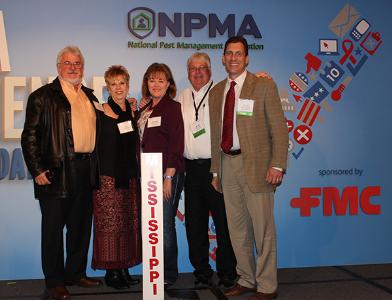
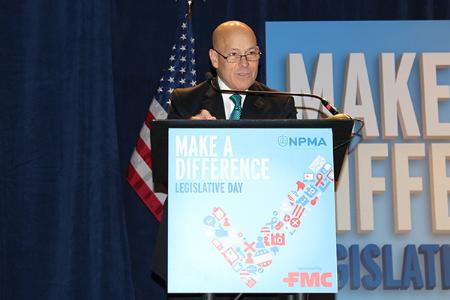
More than 300 industry professionals traveled to Washington, D.C., for NPMA Legislative Day, where this year’s lobbying efforts were two-fold: Attendees thanked their congressional reps for a pair of important legislative wins in 2013; and educate their reps about bee health and the structural pest control industry.
Brad Harbison | March 12, 2014


WASHINGTON, D.C. — More than 300 industry professionals traveled to Washington, D.C., March 9-11, for NPMA Legislative Day, where this year’s lobbying efforts were two-fold: Attendees thanked their congressional representatives for a pair of important legislative wins in 2013; and educated their reps about bee health and the structural pest control industry.
In 2013, NPMA secured a couple of big wins on issues that directly impact pest management professionals – and these outcomes were undoubtedly impacted by Legislative Day visits. At last year’s Legislative Day, attendees asked their House Representatives and Senators to support legislation retaining food uses for the fumigant sulfuryl fluoride (SF) and limiting U.S. Department of Agriculture’s Wildlife Services (USDA/WS) competition with the private sector for urban rodent control work. Both issues were successfully addressed. (Click here to read NPMA's position paper.)
“I hope that last year’s wins were proof positive to you that when you take time to travel to Capitol Hill — and when you take time to contact your legislators — you are heard,” said NPMA Director of Government Affairs Gene Harrington. “When you take time to write to your lawmakers you do make a difference.”
Attendees of this year’s Legislative Day used their visits as an opportunity to thank the many members of Congress that spearheaded the passage of legislation retaining SF’s food uses and helped NPMA satisfactorily address the USDA/WS competition issue. These efforts help strengthen those relationships.
The primary goal of this year’s visits was for attendees to educate their reps about bee health and the structural pest control industry. Specifically, to make them aware that reasons for the declining bee population are complex and involve a whole host of issues including: parasites; diet and nutrition; lack of genetic diversity; habitat loss; beekeeping management practices; weather; and viruses. Attendees also urged their House reps to join the Congressional Pollinator Protection Caucus (CP2C), a bipartisan group dedicated to protecting pollinators and their habitat. (Click here to read NPMA's position paper).
In addition to Capital Hill visits, other highlights from Legislative Day included:
  • A debate between political pundits Pat Buchanan (R) and Donna Brazile (D), sponsored by FMC Professional Solutions. Buchanan and Brazile gave their takes on the state of country. While they differed on policies both agreed that Obama faces a challenging 2014, partly because historically presidents struggle in their second-terms.
  • John Heilemann, author and MSNBC political analyst, gave a presentation sponsored by Dow AgroSciences. Heileman handicapped the 2016 presidential race. Unlike many pundits who have predicted that Hillary Clinton is all-but assured of being the Democatic choice, Heilemann said Clinton’s age (66) might give her reason to reconsider running. On the Republican side, Heilemann said the four candidates he thinks can be energize Republican party's base and also appeal to a broader part of electorate are New Jersey Gov. Chris Christie; former Florida Gov. Jed Bush; Sen. Paul Ryan; and former Arkansas Gov. Mike Huckabee.
  • Mike Allen, Chief White House Correspondent for Politico gave a presentation sponsored by Control Solutions Inc. Allen provided insights into the Obama presidency. Allen said that, thus far, the president’s second-term has been characterized by a “lack of urgency” and that Obama “is convinced his place in history is secure.”
  • PCT presented its 17th annual Technician of the Year Awards, sponsored by BASF, to our winners: Tony Decker, Scherzinger Pest Control, Cincinnati, Ohio – residential category; Corky Long, Presto-X, Springfield, Mo. – commercial category; and Shawn Svehla, Turner Pest Control, Jacksonville, Fla. – termite category.
FMC was the primary sponsor of NPMA Legislative Day. Other sponsors include: Bayer, Control Solutions, Cook’s Pest Control and Dow AgroSciences.

USDA (United States Department of Agriculture) Commits to Investment in Pollinator Health Improvement

From ESA Science Policy News March 6, 2014  (Entomological Society of America <esa@entsoc.org)...

USDA Commits to Investment in Pollinator Health Improvement
USDA announced on February 25 that its Natural Resources Conservation Service (NRCS) will provide $3 million in funding for the improvement of pollinator health.  Funding will come from the Environmental Quality Incentives Program (EQIP) and will be used “to promote conservation practices that will provide honey bees with nutritious pollen and nectar while providing benefits to the environment.”  The funding will be targeted at five Midwestern states: Michigan, Minnesota, North Dakota, South Dakota, and Wisconsin.  Funding will be used to “provide guidance and support to farmers and ranchers to implement conservation practices that will provide safe and diverse food sources for honey bees.”  Applications are due on March 21, 2014.
Sources and Additional Information:
Additional information can be found in a USDA press release at http://www.usda.gov/wps/portal/usda/usdahome?contentid=2014/02/0028.xml&contentidonly=true

So That's Where Honey Comes From, by Kim Flottum in "Catch the Buzz"

Subject: CATCH THE BUZZ - So That's Where Honey Comes From
by Kim Flottum
CATCH THE BUZZ
Nectar: A sweet reward from plants to attract pollinators
Flowering plants need sugar transporter SWEET9 for nectar production
Evolution is based on diversity, and sexual reproduction is key to creating a diverse population that secures competitiveness in nature. Plants as largely immobile organisms had to solve a problem: they needed to find ways to spread their genetic material beyond individual flowers. To make sure that flying pollinators such as insects, birds and bats come to the flowers to pick up pollen, plants evolved special organs, the nectaries, to attract and reward the animals. Scientists from the Max Planck Institute for Chemical Ecology in Jena (Germany) and their colleagues from Stanford and Duluth (USA) have identified the sugar transporter that plays a key role in plants' nectar production. SWEET9 transports sugar into extracellular areas of the nectaries where nectar is secreted. Thus, SWEET9 may have been crucial for the evolution of flowering plants that attract and reward pollinators with sweet nectar. (Nature, March 16, 2014, doi: 10.1038/nature13082)
Despite the obvious importance of nectar, the process by which plants manufacture and secrete it has remained a mystery. New research from a team led by Wolf Frommer, director of the Plant Biology Department, Carnegie Institution for Science in Stanford, in collaboration with the Carter lab in Minnesota and the Baldwin lab at the Max Planck Institute for Chemical Ecology in Jena, Germany, now identified key components of the sugar synthesis and secretion mechanisms. Their work also suggests that the components were recruited for this purpose early during the evolution of flowering plants. Their work is published by Nature.
The team used advanced techniques to search for transporters that could be involved in sugar transport and were present in nectaries. They identified SWEET9 as a key player in three diverse flowering plant species, thale cress Arabidopsis thaliana, turnip Brassica rapa and coyote tobacca Nicotiana attenuata, and demonstrated that it is essential for nectar production.
In specially engineered plants lacking SWEET9, the team found that nectar secretion did not occur but sugars rather accumulated in the stems. They also identified genes necessary for the production of sucrose, which turn out to be also essential for nectar secretion. Taken together, their work shows that sucrose is manufactured in the nectary and then transported into the extracellular space of nectaries by SWEET9. In this interstitial area the sugar is converted into a mixture of sucrose and other sugars, namely glucose and fructose. In the plants tested these three sugars comprise the majority of solutes in the nectar, a prerequisite for collection by bees for honey production.
"SWEETs are key transporters for transporting photosynthates from leaves to seeds and we believe that the nectarial SWEET9 sugar transporter evolved around the time of the formation of the first floral nectaries, and that this process may have been a major step in attracting and rewarding pollinators and thus increasing the genetic diversity of plants," Frommer said.


This message brought to you by Bee Culture, The Magazine Of American Beekeeping, published by the A.I. Root Company. Find us at -Twitter. Facebook. Bee Culture’s Blog.

I'm not dead yet! ( from Jan. 25, 2014)

This was written on January 25th, 2014, but posted 3-19-14.  (Editors note: I had ankle surgery in December,


and have been slow to keep up with beeblog postings as I should have. I will try to do better.)

My goddaughter Ashley and her mom came to visit me this past Saturday.  She's 16 and able bodied.  I'm 52 and still hopping around on one leg with a walker after my ankle surgery of  Dec. 16th, 2013.  We've had tons of snow, so I've neither been out of the house in 6 weeks, nor checked on my poor little bee hives in the backyard.
Ashley likes bees.  She also likes being helpful.  (Such a wonderfully rare teenager!)  I saw she had good winter boots with nice traction on the soles.  I seized the moment!  "Ashley, would you go check my hives and see if any bees are being kicked out of the hive onto the front landing board or in front of the hive on the ground?"  An enthusiastic "SURE!" was her reply.
If you see dead bees recently kicked out in front of the hive, the colony is still alive.  I have my doubts after those severely cold temperatures of last week down below 0*F.  But, I'd sure love to know what's going on out there, and last week we had two upper 50*F days.  If anybody is alive, they would have taken cleansing flights and the mortuary bees would have cleaned out any dead or decaying bees.  So, I asked her to also look for little flecks or specks on the front of the hive.  These specks would indicate their fecal material while cleansing.  They don't go far. It's still too cold.
Liza, her mom looked at me and said, "will she get stung?".  "Oh no!  It's much too cold for them to fly today. She's fine," I replied.  Ashley bounded down the backyard terraced stairs to go to the hives.  Her mom and I sat on the couch in front of the fireplace with my injured foot propped up and drank coffee while chatting. Ashley was gone a long time, and we kind of forgot about her.
I suddenly heard, "Kathy, look!"  Here was Ashley returning with a worker bee in the palm of her hand. "Where did you get her, Ashley?"  "She was on the front porch (landing board) of hive 2."  "No kidding?! That means someone is inside surviving and getting enough honey to stay warm and function enough to kick her dead sisters out! That's good news! I didn't think they would survive those temperatures last week!" Liza and I resumed our conversation and Ashley sat in the rocking chair with the bee in her palm and rocked and watched it.
"KATHY! She's moving!"  "What?"  "She's not dead, she's moving!"  "Really?" "Yes, look!"  And, sure enough, the bee had sat in Ashley's warm palm and in front of the fireplace long enough that she was starting to move her legs.  (The room temperature was about 70*F.) She was not moving fast, by any means, but just as if she were in the last throes of death and grasping at the warmth the new environment provided. "Now, can she sting her?," asked Liza.  "hmmm,...she's not moving too fast!", I said; "well, I think she must have been one of the bees on the outer edge of the overwintering cluster surrounding the queen in the hive, and she took the brunt of these recent cold temperatures trying to keep her queen and other sisters warm; and then, she must have fallen from the cluster to the bottom board where it was colder; her sisters thought she was dead and kicked her out."  "Can I keep her?," asked Ashley. "No!," said Liza! "She really won't survive away from her hive," said I, "but if you get her warm enough to walk, you might try placing her back in the hive, and perhaps she will rejoin the cluster." So Ashley blew warm air on her and ran back down to the hive and held her a bit longer and then gently placed the little honey bee back in the entryway and tried to encourage her to walk inside and rejoin her family.  But, we took some photos first.


This is from Minnesota public radio news (from early March, 2014):

Beekeepers seek halt to corn pesticides said to kill bees


Posted
A group of Minnesota beekeepers on Wednesday asked state agriculture officials to suspend the use of corn seeds treated with certain pesticides.
The petition signed by 40 beekeepers blames neonicotinoid pesticides for killing honeybees.
Currently, Minnesota farmers only have access to seeds treated with neonicotinoid pesticides, but central Minnesota beekeeper Steve Ellis said that needs to change.
"Beekeepers in Minnesota last year and in years previous have been reporting mortality events at corn seeding time," said Ellis, who has about 2,500 hives in Barrett, Minn. "Apparently the dust is getting off of the corn seeding and going off-site and causing poisoning of honeybees on flowers and around their hives."
Ellis said the petition's signers represent just more than10 percent of the managed bees in the state.
In the last several years, more than a third of the nation's honeybee population has died each year, according to estimates from the U.S. Department of Agriculture. Studies have shown the pesticides weaken bees' immune systems.
But the companies that manufacture the pesticides have disputed those findings and are challenging Europe's moratorium on neonicotinoids in court.
Meanwhile, Ellis and other U.S. beekeepers have sued the Environmental Protection Agency for not acting on neonicotinoids.
Ellis said Canada has started a program that makes corn seeds not treated with neonicotinoid pesticides commercially available, and he said he'd like to see something similar in the United States.
"I realize that logistically it's going to be difficult at this time to make that happen for this year," he said. "We need a leader on this."
Ellis said he hopes Minnesota will take on that role, noting that states can have more stringent rules than the EPA.
The Minnesota Department of Agriculture is in the midst of a yearlong review of neonicotinoids. A House environment committee will get an update from the agency on Thursday and take public testimony on threats to pollinators.

Tuesday, January 21, 2014

Winter!

It is snowing heavily outside and has for about 12 hours now.  Tonight the temperature is supposed to drop to 8 degrees F.  With windchill, it will feel more like -10F, the weatherman says.  Will my bees survive?  This is a good question.  These bees are from queens that I ordered from Georgia (USA) last early spring.

Bees have all kinds of fascinating tricks to stay warm and avoid freezing. Bees gather around their queen like a big cluster of grapes once the temperature drops below about 50F.  She's in the middle.  They surround her and vibrate their middle body segment, the thorax, to keep her and the whole hive warm.  Bees, like many insects, also have a glycol component to their hemolymph (blood).  This acts like an antifreeze and prevents the blood from forming ice crystals and freezing.

But, there are a lot of complicating factors to their efforts to make it as a hive through the winter months; I highlight several here.  1) Is there enough honey in the hive for the workers to eat as the bee cluster with the queen in the center moves up in the hive?  This will be their source of energy for metabolism.  Normally, for Maryland, we expect to have a few cold nights in winter, but this is already our second or third bout of single digits.  Two weeks ago, we even got down to -1F! Unheard of here; a new term-polar vortex was in suddenly our vernacular.We would normally be fine with 60lbs of honey stored in the hive for the winter, but who knows with these low temperatures.   2) Is there enough ventilation? To stay warm, the bees vibrate their thoraces and keep the queen in the center of the cluster warm (as long as there is enough honey to eat to do so!) The temperature doesn't fluctuate much from about 92-95F all winter long.  One must be sure that the top cover of the hive is cocked a bit to allow steam to rise and leave and not condense back on them as the hot air hits the cover to outside with cold air; moisture will promote disease causing fungi. The hive's bottom board allows for passive ventilation up and through the hive and out the top. But, below the hive, the bottom board area must be clear of obstacles, such as snow, to allow for this passive airflow to occur to heat the hive and cluster. 3) Are there enough bees to cluster and provide the warmth for the queen and hive?  A healthy hive going into the winter months needs to have 60,000-100,000 bees present. 4) Is there a healthy queen present?  This is only evident ahead of the winter by how well she is laying eggs and how she looks.  (In the winter she is not laying eggs.) 5) Are there disease or pests present in the hive? Is the hive in general healthy? Varroa and tracheal mites, and small hive beetles are just a few of the many pests that my hives have experienced.  A weakened hive having to fight pests, predators or disease will have a very hard time surviving the winter. 6) Is the hive location protected from strong northerly winds that bring rains, hail, sleet, ice and snow?  The front of the hive (entry) should not face North.  If some buffering device can be placed to prevent heavy winds, that is also ideal.  In more northern climes, beekeepers often insulate their hives with things like tar paper wrapping. (I've never done this and do not know much about it. But, in places like Maine and Minnesota with prolonged periods of frigid temperatures, this is commonplace. 7) Is the entrance reducer on to the smallest opening? To help insulate the hive, you want the smallest entry opening available.  YOU DO NOT WANT TO CLOSE THE HIVE! On nice days, the bees will take cleansing flights and need to be able to get outside.  In areas that get heavy snow pack that might cover the entrance reducer down low, many beekeepers will create a second opening up higher in the hive near the top, by drilling a small opening. An opening must be present. If one can make it to the hive and sweep snow or ice off of the entrance to keep it free and open, that is best.  But, snow breathes to some extent.  Ice does not.  8) Can  an ipm bottom board be added into the slot at the bottom of the hive?  This will help to insulate the hive as well.

Beyond these illustrated steps, the beekeeper cannot do much more to protect the bees from winter's onslaught.  It makes one wonder how bees in nature survive at all.  But, they do.  So, sometimes, even benign neglect is best! And, beekeepers can kill their bees with too much attention.  It's a delicate balance knowing when to assist or not.  Knowing that these queens originally came from Georgia in the Southern USA, I feel the need to assist them some.

Most winter bee kills are due to the cluster either getting wet and chilled/cold from moisture condensing and falling on them, or to starvation; either they don't have enough honey stored, or if they do, they don't move up into it properly.  Yes, there can be enough honey in the hive, but as they move up into it through the winter months, the cluster may be off center to it and miss what's available all together.  This is particularly sad when the beekeeper sees it.  So close, and yet so far!

A friend asked me how to know if my bees were alive in the winter months, since I could not open the hive. (And, please DO NOT OPEN THE HIVE, unless it is an ambient temperature of at least 55-60F outside. The bees cannot fly at lower temperatures, and the hive will lose hard to replace heat.)

There are a few signs to look for.  If the colony is alive, workers will be kicking out dead bees that were on the edges of the cluster, keeping the queen warm in the center.  You will see their dead bodies on the landing board and in the front of the hive on warmer days as their sisters carry them out.  (On frigid nights, there is a kill of those bees on the edges of the cluster, while the others in the center are at that toasty 94F! Since no new bees are being made-no eggs laid-at this temperature and time of year, the cluster will get progressively smaller as a result, with fewer individuals vibrating and generating heat.)

The other two traditional ways to know if your bees are still alive is to see them break cluster and flying on warm days, and/or to see them depositing fecal material on the front of the hive-little brown specks or flecks. On warm days (above 55F), the bees take cleansing flights to relieve their guts of the built up of feces and metabolic wastes.  They do not need to fly far to do this; just out the door and back.  (Amazingly, they can hold it all in until a warm day to do this.)  So, if you see the brown flecks on the front of the hive when they were not there before, and it's been a warm day, this is a good sign.

The non-traditional approach would be to use an infra red camera to see a heat profile within the hive.  I do not own an infra red camera, and because I'm still in a cast from an ankle surgery in mid-December, I can't get out to see how my bees are doing. So, I'm keeping my fingers crossed that they are ok!

And, I've already placed an order for bee packages, just in case I lose my hives.  Order your bee packages, now!
View from my living room window-snow on my hives this afternoon!

Add Tobacco Ringspot Virus to Possible Causes of Colony Collapse Disorder

from ESA entsoc.org....


Add Tobacco Ringspot Virus to Possible Causes of Colony Collapse Disorder

In 2006 a phenomenon called Colony Collapse Disorder(CCD) emerged. Beekeepers and scientists noticed that large numbers of adult honey bees were leaving their hives and failing to return, which had large implications for farmers and growers who use honey bees as pollinators.
Today the exact cause of the CCD is still unknown, but scientists have generally concluded that it’s caused by many factors, including pathogens, tiny mites that parasitize the bees, exposure to pesticides, stress on the bees as beekeepers ship them from one place to another, nutrition, and others.
According to a report by the National Honey Bee Health Stakeholder Conference Steering Committee in November 2012, three of the main research highlights were 1) the parasitic mite Varroa destructor remains the single most detrimental pest of honey bees, and is closely associated with overwintering colony declines, 2) multiple virus species have been associated with CCD, and 3) the Varroa mite is known to cause amplified levels of viruses.
Now a new study published in the American Society for Microbiology’s journal mBio seems to strengthen these conclusions. The study shows that tobacco ringspot virus (TRSV), a virus that is known to affect plants, can also replicate itself in honey bees and in mites, which can further spread the virus among the bee population.
“Here we provide evidence that a pollen-borne plant virus, tobacco ringspot virus (TRSV), also replicates in honeybees and that the virus systemically invades and replicates in different body parts,” the authors wrote. “In addition, the virus was detected inside the body of parasitic Varroa mites, which consume bee hemolymph, suggesting that Varroa mites may play a role in facilitating the spread of the virus in bee colonies.”
However, the authors have also stressed that their findings have NOT solved the CCD mystery. Yan Ping Chen, a bee pathologist at the USDA Agricultural Research Service and lead author of the study, told the Los Angeles Times, “I want to be cautious. The cause of Colony Collapse Disorder remains unclear. But we do have evidence that TRSV, along with other viruses that we screen on a regular basis, are associated with lower rates of over-winter survival.”
Read more at:

Thursday, January 16, 2014

Putting Down Roots

This article below is from my favorite charity LWR (Lutheran World Relief).  See:

http://lwr.org/site/apps/nlnet/content2.aspx?c=dmJXKiOYJgI6G&b=7535491&ct=13600533&utm_campaign=eNews&utm_source=16_January_2014&utm_medium=email&utm_content=Learn%20Morew%20Text%20Link

Whenever I have an opportunity to donate to LWR, I do so, because I know the majority of the donation is going to the cause and not to overhead and fees.  I'd encourage you to consider the same!  Here's a bee-related sustainability project they have in Nepal. -Dr. Kathy

Putting Down Roots

By Nikki Massie
Lutheran World Relief has officially opened our own office in Nepal, making it possible to reach even more people with long-term, sustainable development projects.
Lutheran World Relief has worked in Nepal since 2009, in partnership with Lutheran World Federation (LWF), reaching out to marginalized people and helping them to grow food, support their families and prepare for and cope with natural disasters.
“As LWR has begun to increase both the number and scale of our programs in Nepal, it was important to establish our own office to better coordinate our work with local partners and the government,” said Nicole Hark, LWR’s deputy director for Asia & the Middle East.
The opening of the new office means that LWR can expand its work into more remote areas of Nepal and bring what we’ve learned from past successes.
Like that of Dhanbir Thada. His family struggled for years to grow food on a small parcel of land. Unfortunately, they could only produce enough to feed the family for three months each year.

With the help of an LWR project, Dhanbir received training on beekeeping, which is a traditional activity in the area that has the potential for a more sustainable income. One special skill he’s learned is how to transfer hives from the forest to his village, where they can be better maintained. With this new skill, Dhanbir has not just one new source of income but two. He is able to sell the honey produced by his own bees, and one day he hopes to make a profit by transferring hives from the forest for fellow community beekeepers.
“I am doing this not only for my family but the entire village depends on me for this transfer,” Dhanbir says.
This is exactly the kind of life-changing support LWR looks forward to offering to more people in Nepal. Kiran Ojha, LWR’s country director for Nepal said, “... our registration ensures LWR’s ability to scale up our work and helps us to better serve additional poor and marginalized populations in realizing their full potential.”
Thank you for your support of LWR. Because you invest in our sustainable development approach, we look forward to a long, productive future in Nepal. With your help, we’re putting down roots and helping people discover their own paths out of poverty and into futures brimming with promise.
Nikki Massie is LWR’s Staff Writer.